
Sorry, nothing in cart.
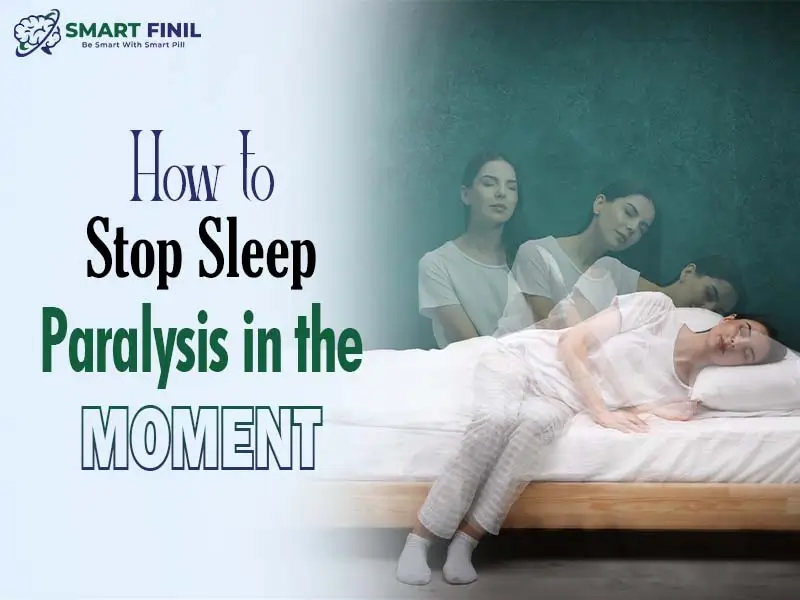
How to stop sleep paralysis in the moment
The sudden immobility in the change of sleep is something that is very disturbing, especially when it happens suddenly and without pre-knowledge. Most of them complain of extreme fear, confusion, and loss of control even during such times. To know how to act in such a way will then be a key to alleviating suffering and bringing back calmness.
Learning how to react to such episodes is vital in order to ease anxiety and feel control again. This guide is devoted to the application of evidence-based, practical strategies to control sleep paralysis at the moment, coupled with an explanation of its causes, symptoms, and the treatment options that are available, so that a well-informed choice can be made.
What Is Sleep Paralysis
Sleep paralysis is a temporary sleeping disorder, which happens when an individual is mentally awake but cannot temporarily move or talk because the body is too weak. This occurs when passing in and out of sleep and muscle relaxation relating to dreaming do not cease because of regained consciousness.
The brain is awake, but voluntary muscular control is suppressed briefly as a normal physiological process during REM sleep. Even though the experience can be abnormal or threatening, it is a manifestation of disjunction of sleep-wake timing in lieu of a structural or neurological malady.
Show episodes usually end themselves within a few seconds or minutes. It is valuable to understand this mechanism because an individual can reduce panic when realizing that the body will automatically recover movement, and the perceived time of the episode will be shortened.
Sleep Paralysis Symptoms
The symptoms differ in different individuals; however, they usually involve the inability to move arms, legs, or torso, and the inability to speak, although they know perfectly well. After that, many individuals complain of feeling the pressure on the chest that can be likened to constrained breathing, even though the breathing goes on as usual.
Fear, panic, or helplessness are emotional reactions that are common and usually enhanced by bright sensory perceptions. They can be visual or auditory hallucinations or even the sensation of a person being around.
Notably, the symptoms are not permanent, and they do not result in bodily harm. After an epileptic cut-off, there is a restoration of normal movement and consciousness without any residual or residual neurological manifestation or cognitive deficit.
Sleep Paralysis Cause
The disturbance in the mechanism of coordinating the states of sleep, which is mostly when REM sleep is in conflict with the state of wakefulness, leads to the condition. Some risk factors are sleep deprivation, irregular sleep patterns, stressful life moments, anxiety disorders, and frequent awakenings, among others.
Episode frequency also has been found to be higher in sleeping on the back. Some drugs which have an effect on sleep architecture also may play a role. Although there might be a genetic predisposition, the most relevant factors are the environmental and behavioral factors.
These underlying causes can be usually affected by better sleep routines, which causes the frequency of the episode to be significantly reduced, therefore, lifestyle and routine are key determinants in preventing episodes.
How to Stop Sleep Paralysis
In one episode, the best immediate intervention is not to grapple with it, because when a person panics, things are likely to continue. Attention to slow, gradual breathing will solve to balance the nervous system and brain to make every part of the body completely awake. By trying tiny slow movements, i.e. wiggling of the toes, fingers or tongue, muscle control can be slowly regained.
It is useful to some people to focus on blinking or moving the jaw in a gentle manner. Fear can be reduced by reassuring oneself internally that it is a one-time experience that is harmless and that will end up having a short duration. Sleep research has found these techniques as being practical, non-invasive and helpful in regaining control.
Sleep Paralysis Treatment
Long-term care aims at prevention in terms of regular sleep hygiene and stress management. Stable sleep cycles and minimized disturbance of REM are achieved by keeping regular sleep and wake hours.
Sleep improvement can also be further achieved by restricting caffeine, alcohol consumption, and screen time before sleeping. Mindfulness or mindfulness-based breathing exercises can be considered as relaxation methods that reduce the general frequency of episodes.
Cognitive behavioral therapy, in some instances, is also prescribed in cases of persistent or distressing cases to treat anxiety in relation to sleep. smartfinil.com offers various evidence-based medical interventions. Invasive approaches are not recommended in accordance with the latest clinical recommendations, where behavioral and psychological interventions are prioritized as a means of continuing management.
Is sleep paralysis dangerous?
Medically, the condition is not deemed to be physically harmful and does not lead to permanent damage to the brain, heart, and respiratory system. Normal breathing is observed during an episode, in spite of the feeling of chest pressure. Nevertheless, frequent incidences may have adverse effects on mental health as anxiety, sleep phobia, or insomnia, which may also persist.
It is these secondary effects and not the episodes that may have an impact on the overall health when not addressed. This is why it is significant to control such contributing factors as stress and poor sleeping habits. Through the correct understanding and preventive measures, majority of the people are greatly improved with time.
FAQs
Is sleep paralysis common?
Yes, it has been found that a lot of individuals have at least one episode in their life.
Why is sleep paralysis so scary?
It is terrifying since the consciousness blends with immobility and intense sensory experiences causing fear reaction.
How Is Sleep Paralysis Diagnosed?
Clinical evaluation of the symptoms is usually used to diagnose it, and sleep studies are applied only in case of need.